Categories: life

RSS - Atom - Subscribe via email

Planning logistics and support for safe streets protests and rallies

Posted: - Modified: | life, toronto

: Added more wrap-ups and upcoming events

We attended the town hall on the topic "How are we going to protect our bike lanes?" It was wonderful to see hundreds of people thinking about concrete ways that they could help make things better. I loved seeing all sorts of people there, and even more that our 10-year-old daughter stood up to host a breakout session on a topic she cares about: supplies and repairs during protests.

Breakout topics

Here were the general topics for open space conversations and some notes on next steps (thanks to my husband for extra notes!):

  • rapid response: shift plan
  • organizing health care workers to protect our bike lanes: push media attention, union statements, op eds, journals
  • organizing parents to stand up for bike lanes: For Our Kids, virtual meeting, bike bus?
  • student organizing/University of Toronto Graduate Students’ Union (UTGSU): posters, stickers, town hall for students
  • Critical Mass organizing: new ride in May?
  • non-violent direct action: training on the 29th?
  • Bike Lanes 101: bring in new people, build people power, small group coffee chats, talk to the 905
  • engaging business: flip the script, owners, bia, consumers - be visible as cyclists, shopping passport
  • cycling winter: shovel bike lanes ourselves
  • connecting to opposition to highway 413
  • engineering reviews/critiques: will get drawings, make them public
  • future proofing: build few projects to high standards, accelerate construction, seamless network, push councillors, education, know what good infra is
  • federal level involvement: disallowance, cut bill 212, organize on ridings basis
  • website and digital infrastructure: Civic Tech Toronto
  • storytelling with data: isolate data for Bloor Yonge University lanes, bikeshare counts, ID core audience, biz owners, 905 drivers, common misconceptions, response, more data from city
  • guerrilla postering: creating a repository of art, setting up a mailing list
  • supplies and repairs during protest: coordinating supplies at the next protests/events
  • engaging drivers
  • organizing non-cyclists allies: open letter
  • safe complete streets: stop saying bike lanes, say complete streets, beautify, personal stories over stats
  • how to organize provincially
  • pressuring the city to not police protests: strategic mtg with councillors, pressure mayor, reduce police budget, testimonials from arrested
  • transit: TTC integration, free bike share pass?

More wrap-ups:

Here are more notes on the parenting breakout and the supplies breakout that the kiddo hosted.

Parenting, families

I participated in the conversation on organizing parents to stand up for bike lanes. We talked about making protests and rallies friendlier for families and kids through hot chocolate, popsicles, bubbles, stickers, bike decoration stations, and other activities. People also exchanged ideas about organizing bike buses to help kids bike to school, meeting up with other cyclists at bike-friendly cafes during parental leave, and promoting bike education. We talked about widening the conversation from a focus on bike lanes to safety for everyone and connecting to what people care about, especially through personal stories and concrete life changes.

One of the triggers for the shift towards a stronger cycling culture in the Netherlands was collective outrage over so many child deaths in traffic accidents. I would like to get to that point without as many individual tragedies.

It's challenging to go to protests and rallies when you have to consider kids in tow. They get cold and hungry and bored and tired. They need to go to the bathroom. They need to be safe, especially when there's anger or aggression from people on the road or online. I wonder what can make it easier for families to come.

My husband and I have been going to quite a few of these events together with our 10-year-old. She likes offering people hot chocolate, snacks, and hand warmers: little ways to care for people who care about everyone's safety. I want to connect with other people so that we can figure out together how to make it easier for families to get involved. I am totally willing to start with hot chocolate and stickers. =)

Resources:

Supplies and repairs for supporting protests

I was surprised when our normally quite reserved 10-year-old suggested this open space breakout session herself, standing up in front of hundreds of people to invite them to a conversation about how to support protests through supplies and bike repairs. When she talked to the coordinator, she opted for a small space for about 5 people, but we ended up with about 10. She reported the results back to the main audience herself, too.

It's surprising how little things can go a long way to helping people feel more supported and taken care of. Our experience started by going to protests and offering people water refills, because it's important to stay hydrated. Most people have their own water bottles, but they might run out over the course of a few hours. We have cargo bikes, so my husband brings this huge container of water and refills people's bottles. As the weather got colder, we shifted to bringing warm water too. We're used to making hot chocolate for a crowd because it's a good way to keep kids warm during an outdoor play date. It's actually pretty delightful to see even adults light up when you offer them marshmallows with their cocoa. My husband's also been bringing bike repair tools, since quite a few people had to deal with flat tires from debris in contested bike lanes. Other people have even set up bike stands for check-ups and repairs. Other people have brought hand warmers and snacks. They pitched in with a variety of masks when the machines were grinding up the road surface. Little things help.

Sometimes having a list of ideas makes it easier for people to find one or two things they can contribute. We brainstormed a lot of little things that could help at these events:

  • table with snacks & info
  • warmth, water, and food
    • hot cocoa
    • hand warmers
    • popsicles in summer
    • water: water bottles, refills, hot water
    • pizza, samosas, etc.
  • tools
    • nametags? totally optional
    • signs, flyers, sign-making station
    • masks, PPE, first aid
    • bike repairs: tubes, tools → reach out to bike shops
  • info
    • info, contact, sign up
    • zines
    • sign-ups to coordinate with Bike Lane Watch?
    • nearby support sites: where to find bathrooms, nearby bike-friendly businesses to recommend
  • fun
    • kid activities, games, fidgets
    • stickers, sticker trading
  • other ideas
    • music
    • candles
    • someone to lock up and retrieve a bike if people get arrested
    • glow sticks, lights, batteries, chargers - Green P: power?
    • introvert corner
    • camp chairs, mats, tables
    • ways to reduce packaging, trash
    • moral support
  • $ funds
    • individuals sharing
    • tip jar?
    • that GoFundMe?

It might be nice to figure out how we can coordinate with other people who are thinking of bringing things or ordering things so that for example, if we're picking up pizza, we don't end up with too much pizza. Maybe the Telegram chat?

Sometimes the protest is on a sidewalk where there's not a lot of space to set up a table or cargo bikes. It might be a good idea to identify beforehand a park or a side street where we can set up some more support, so that people can go there to take a break before they go back into the fray. For example, when the protests were at Islington, we stayed at Tom Riley Park, and people came by to refuel as needed.

Is there funding? Quite a few people have offered, although it feels a little complicated. There has been some kind of fundraiser, but we haven't coordinated anything with them. People have also offered donations or suggested having a tip jar. For us, I think we're more comfortable just sharing what we can share as a gift (and avoiding liability! =) ). I love how other people have, on their own initiative, brought samosas and naan bread and pizza and sesame crisps and Timbits. More potluck than catering.

People suggested putting together some pre-packed boxes so that they're easy to grab and go as part of a rapid response to the anticipated bike lane removals next spring. Maybe that's like how we keep a large bag with cups, marshmallows, stir sticks, and hot chocolate mix, so that could be a starting point.

Upcoming events

Tomorrow (Sunday), Friends and Families for Safe Streets is organizing a memorial at 4:30 PM at Tom Riley Park on Nov 15 (parking lot near Bloor and Aberfoyle Crescent) as part of the World Day of Remembrance for Road Traffic Victims. We hope to be there. If you want to come and help figure out the logistics of caring for people at these rallies and events, drop by, say hi, and have some cocoa!

Protect Our Bike Lanes! Basic Action Training! Tickets, Sunday, November 29  •  10 AM - 4 PM | Eventbrite

7th Annual Cycling Good Cheer — Toronto Community Bikeways Coalition

See https://showuptoronto.ca/ for more upcoming events

View Org source for this post

Notes from "An Evening with Valérie Plante" (Nov 13, 2026) - climate action, Montréal, municipalities

| life, toronto

I went to An Evening with Valérie Plante to learn about her experience in prioritizing the environment during her two terms as the mayor of Montréal. It was interesting to hear about the sponge parks that they built in order to absorb excess rainwater, designing pedestrian streets for beauty and comfort, the importance of connecting with public transit, and how they built an express bike network as part of improving safety for everyone, including the data they collected in order to make the case.

Her key tips were:

  1. Build partnerships
  2. Support citizens' initiatives
  3. Connect with what people care about

Here are my notes:

Feel free to use/share them!

More about Valérie Plante

View Org source for this post

Continuing my experiment with (semi-)retirement

| experiment, life

Winding down consulting

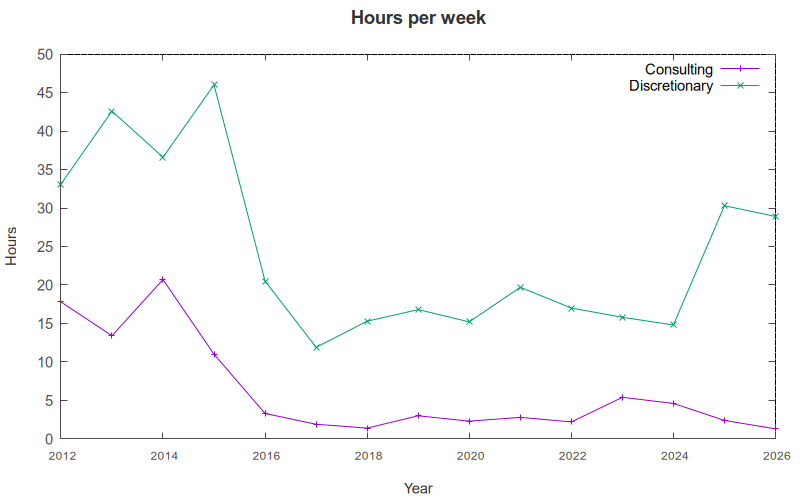
I've been working with the same consulting client since February 2012, when I decided to start this experiment with semi-retirement. We figured out an arrangement that worked out really well. People came up with lots of ideas and I picked whichever ones I wanted to implement. I loved being able to choose when to work and what to work on. Sometimes that meant sketching out a quick prototype while the kiddo was napping, waking up early in order to get something done, or paying a babysitter in the hopes of getting a good chunk of focus time. (A+ often didn't like having a babysitter.) It turned out that I'm pretty good at coming up with prototypes and working around the limitations of systems. I appreciated being able to let other people take care of meetings and making things production-ready. It's been fun having the external validation of solving people's problems, and I've enjoyed watching my work take root and become part of the way that people do things.

My consulting contract wraps up at the end of this month, and I'm satisfied by how everything has worked out. The clients are moving away from having contractors to focusing on full-time employees, which makes perfect sense. I am very part-time, and I like it that way. Over the last two years, I've averaged about one to two hours of consulting per week as I've trusted myself with more self-directed time, so my day-to-day routines aren't going to change much. Even though the kiddo is ten and is reasonably well settled into virtual grade 5, and my husband retired in Dec 2024 and can therefore be around if she needs help, I don't want to ramp up my work.

consulting-hours-per-week.png

It did feel really nice to have clear requests, get things done, check things off lists, and solve people's problems. I learned that I tend to be more of a follower than a leader; I don't usually come up with generally-useful ideas myself, but I might be inspired by someone else's question or idea. Fortunately the low-energy days of pregnancy and parenting helped me learn a little more about adjusting to not always getting that kind of clearly-visible progress and working on my own things.

My initial five-year experiment with semi-retirement was interrupted in year four by parenting, but I think my time has now stabilized enough that we can probably consider the experiment resumed. As this consulting part winds down, I think I'll focus on my own interests instead of looking for a hustle. If I'm crunching my numbers correctly, our savings and investments can probably support our lifestyle just fine. My husband and I are both frugal by nature. If the markets crash significantly, the world has bigger problems and we'll need to figure out how to adapt anyway. In the meantime, I can sit out all the thrashing and carnage around artificial intelligence and large language models.

Retirement

I used to smooth over the initial awkwardness of the "So, what do you do?" small-talk question with saying, "Oh yeah, I do some consulting" or "These days, I'm focusing on my kiddo," but I guess I'm growing out of that phase. My real preoccupations tend to be too niche for conversation with, say, random French tutors: "I tinker with Emacs for fun. It's a text editor. Umm, that's an application you could use to write words or programs." It might be time to try out saying, "I like to program and write. Sometimes I draw." Or maybe I can get away with: "Finance, pretty boring, can't talk about it much." Depending on how energetic I feel, I can usually nudge the conversation into more interesting directions by asking the other person questions, anyway.

My husband has been in proper retirement mode for almost two years. I don't think he really does this small talk thing either. He enjoys volunteering with Bike Brigade, doing more coding and electronics, reading lots of books, and improving his health. Maybe I'll switch into proper retirement too. I'd like to get better at taking care of my health, and goodness knows I have a never-ending list of ideas I want to explore. It's a real privilege to be able to share what I'm working on and learning for free instead of joining the crowd of people trying to get other people to pay for or subscribe to vibe-coded apps and services.

Parenting

As I mentioned, the kiddo is 10, so this is an especially good opportunity to focus on spending time with her. I think she might be twice-exceptional. We're starting to see some areas where she struggles with things that might not be easily explained by her giftedness, like sensory sensitivities, emotional regulation, and social interaction. As we dig into it, I'm finding things on the self-assessments that apply to me too. For example, statement 41 on the Autism Spectrum Quotient: "I like to collect information about categories of things (e.g., types of cars, birds, trains, plants)." <gestures at Emacs News> I tend to score 40+ out of 50 on the whole self-assessment, with a threshold of 33 suggesting significant traits of autism, so yeah… Anyway, we'll see what the public school and public health systems might be able to help her with, but I'm not counting on much. Funding is limited, and lots of kids have a much harder time. For me, I don't need accommodations for work or school. Private assessments are expensive, and there's not really that much one can do for some things aside from trying to take better care of yourself, which I can do even without a formal diagnosis. (Earbuds for noisy environments, and knowing that I may need lots of quiet time; delegating social stuff to other people; not worrying too much about the kiddo while she doesn't feel like focusing on social skills - when she wants to, we can look into that.) So it'll probably help a lot to spend time figuring ourselves out, if the standard ways of doing things might not work so well.

Besides, it's fun to spend time together. We've been making the most of our season passes to the amusement park, and we've also been playing a lot of Minecraft together. She likes it when I play the same games she does. I'm finding ways to get more out of even the solo games we play side-by-side, like Pokémon. If I configure my controller to be usable with one hand, I can use the other to lift small weights, and I can listen to and repeat my French practice audio files. I won't have a kid forever, after all. My husband won't be around forever either. Good to make the most of the time we have.

I wonder what it'll be like for the kiddo to grow up seeing us both follow our own rhythms. I hope it will be good for her, despite the friction with school and other regimented systems. As I write this, she's sleeping in. I've told the school she'll probably be absent for the day. She might attend in the afternoon, or she might do her work asynchronously. (Update: She joined the afternoon class.) She tells me many of her classmates don't do the work, so the teacher spends quite a bit of time reminding people. I can see why she might not value class time as much. Having developed a keen appreciation of the difference being well-rested makes, I am okay with her experimenting with finding her own rhythms and seeing what kind of feedback she gets from her decisions. It doesn't make a ton of sense for me to say: you need to comply with school in order to get a good job. It's better to figure out something that works for you sustainably. A regular job might not be a good fit for her anyway. At least she knows she can figure out an alternative, and she can see the kinds of choices that help make that possible.

One might argue that this sort of life is too soft, too comfortable. It wastes "potential" and doesn't develop grit or persistence. I know that I can extend myself for things that matter to me, like this whole adventure into parenting. In general, though, I've greatly appreciated having plenty of slack in my life, allowing me to deal with things with less stress and more equanimity than otherwise. It feels to me better to start from a small, solid base than to feel overextended. As much as I can, I'd like to also help the kiddo figure herself out. Better to be in tune with yourself than to burn out chasing other people's priorities. Besides, it'll be interesting to see how much we can hack the system to work around its limitations.

My own interests

I'd love to keep tinkering around with Emacs, perhaps livestreaming so that people can ask questions along the way. I'd like to write about and package up my experiments so that other people can build on the ideas. I've been having lots of fun challenging my brain with French, too. In addition to the satisfaction of feeling more things click in my brain and the delight of helping the kiddo explore it outside school, I get even more reasons to play with my Emacs setup and my workflows. (Not that I needed the excuse, but still.)

So: a slow life, a "let's try things and see" sort of life, where we can experiment with things that might not yield immediate results, where it might not even be so much about getting answers but more about learning how to ask questions and listen. What could this look like? I think I might try a year-long experiment with proper retirement, zero consulting: spending time on the things that matter to me while funding expenses from savings and investments.

Time to see if my Ledger record-keeping will pay off when it comes to helping me calculate adjusted cost basis and capital gains. Let's see if I can file our taxes properly. There's paperwork, but it's probably manageable. (I still feel a sense of satisfaction from the time the Canada Revenue Agency asked about the medical expenses we claimed one year and I sent back a PDF with a proper table of contents that linked to each receipt, yay LaTeX.)

The intrinsic fun of learning things and trying things out should be plenty to keep me busy, and there's always helping out with the Emacs community or volunteering with Bike Brigade. We don't need to figure out grand, universal truths. It's enough to keep figuring out what might work in this particular moment for our peculiar selves, and perhaps share those notes in case they happen to resonate with someone.

Do I want to set up a Github Sponsors page, Patreon community, or Liberapay tip jar, like many cool Emacs people on the Internet? Not really, not for now. Times are rough for a lot of people, and I'm in a luckier position than most. I think I have enough for most of the things I want, and I like to consider those things carefully anyway. If people do want to share something, time would be amazing. I'm slowly getting the hang of paying people to help me learn, as in the case of French tutors for pronunciation and conversation and with Prot's Emacs coaching as a way of adding another perspective to some of my livestreams. I'm sure there are all sorts of things I could learn from people or work with people on.

Let's see what this retirement thing is like!

View Org source for this post

Considering my time balance this schoolyear, and getting ready for summer

| time, quantified, parenting, life

It's A+'s last week of virtual Grade 4 before summer vacation. This time of the year, when the teachers turn to filler activities like games and movies, she tends to find the pace excruciatingly slow and of little interest to her. There was a substitute teacher on Monday. She's not keen on having a substitute teacher since they tend to run into technical issues or go at a much slower pace. She already finds the regular class pace agonizingly slow. Her classmates goof off a bit more around a sub, too. But I needed some time for paperwork, so she begrudgingly signed into class. She reported that, as predicted, they got absolutely nothing done. The students played games and watched a movie. On Tuesday, there was another substitute. I'd done my paperwork for now, so I called the school to let them know she'd be absent. We were about to head out for some ice cream after breakfast, but she got upset about something and decided to stay in her room for a bit. I finished putting together Emacs News and played a bit of Stardew Valley with the Tileman Reworked mod to destress after the last few days of paperwork, and then I started on this reflection.

(Wednesday update: Back to the regular teacher, but now there's a Zoom update that's making it hard for the students to connect to class, so the teacher is switching back to Google Meet for a bit. It sounds like A+ managed to make it back on. This afternoon, they're going to play some more games and watch a movie, so I think I'll take A+ out if she wants to do some math or go shop for earbuds to replace the one she lost.)

The change of routines to summer is a bit challenging for us. Well, the schoolyear is challenging for us too. I suppose summer is challenging in a different way. The playgrounds are busier and louder. The sun is brighter and hotter. The usual rhythms of playdates with her friends changes as they go to sumgmer camps or other activities. I move from having medium-sized chunks of fairly predictable focus time to playing everything by ear.

Time analysis

Before we officially head into summer, I want to think about how I used my time this schoolyear, and how I can prepare for summer and next schoolyear. How to read this graph: gray is sleep, pink is childcare, blue is more focused time, orange is consulting. If you click on the image, it opens an SVG with tooltips.

2024-2025.png
Figure 1: 2024-2025 (grade 3)
2025-2026.png
Figure 2: 2025-2026 (grade 4)

The biggest difference was that A+ wanted to exert more independence and autonomy when it came to school. In Grade 3, she wanted me to stay in her room so that she could ask me for help or hang out with me when she was bored. In grade 4, she preferred to have her room all to herself. W- helped me set up a little desk in the corner of another room on the same floor, so I could still be close by, but A+ mostly did things independently. Or didn't do things, as the case may be; I learned not to push her on schoolwork, since the only thing that accomplished was grumpiness all around. I've been practising stepping back. It's her experiment, after all, and the teachers can give her feedback on school things. I can keep myself busy with my own focused-time stuff so that I don't fret at her. After I got through my initial anxieties, I settled into doing more of my stuff during the schoolday.

Category 2024-2025 % 2025-2026 % Diff % h/wk Diff h/wk
Personal 9.2 13.8 4.6 23.2 7.7
Discretionary - Productive 13.9 18.4 4.6 30.9 7.6
Unpaid work 4.1 4.6 0.5 7.7 0.8
Discretionary - Family 0.3 0.7 0.4 1.1 0.6
Discretionary - Play 1.9 1.1 -0.8 1.9 -1.3
Business 2.1 1.1 -1.0 1.8 -1.7
Sleep 33.4 32.2 -1.1 54.2 -1.9
A+ 35.1 28.1 -7.1 47.1 -11.9

In grade 4, A+ started learning French. I started learning French too so that I could help her. I practised pronounciation with a virtual tutor once or twice a week, and I wrote journal entries in French too. (These images are just screenshots.) There were other discretionary activities, of course.

Category 2024-2025 % 2025-2026 % Diff % h/wk Diff h/wk
Discretionary - Productive - French 0.0 5.2 5.2 8.8 8.8
Discretionary - Productive - Emacs 4.5 7.3 2.8 12.2 4.8
Discretionary - Play - Stardew Valley 1.2 0.7 -0.5 1.2 -0.8
Business - Earn - Consulting 2.0 0.8 -1.1 1.4 -1.9
Discretionary - Productive - Writing 2.9 1.3 -1.6 2.2 -2.6
2026-06-23_12-35-42.png
Figure 3: Heatmap of time I spent on French (370 hours since Oct 23, 2025)

I tended to turn to Stardew Valley for de-stressing or revenge bedtime procrastination. Interestingly, my nascent fixation on French pretty much replaced Stardew Valley until it got slowed down by other things happening in my life starting April, which also coincided with my time on Stardew Valley picking up again in April in order to unwind.

2026-06-23_21-33-10.png
Figure 4: Heatmap of the time I spent on Stardew Valley (175 hours since June 23, 2025)

Emacs continued to be another good way to unwind. I gave myself permission to spend more time just having fun with Emacs. Following up on my reflection for Emacs Carnival March 2026: Mistakes and learning to reach out, I started scheduling conversations during A+'s schoolday. I did some Yay Emacs livestreams and Emacs Chat interviews as an experiment. I think it was a good way to get lots of tips out of people's heads and into videos/transcripts/screenshots, and I also improved my workflow for editing transcripts and extracting images. Not counting Emacs News, I wrote 47 Emacs-related posts during the previous schoolyear and 65 posts during the current schoolyear.

Other changes this schoolyear:

  • Pre-adolescence: A+'s been having a harder time with her feelings. I think this might be related to pre-adolescence. Totally normal. One of my goals is to keep myself calm and regulated, and another one is to help her connect with more people she likes so that she can feel supported even when she's grumpy with me. She can chat with her aunts and cousins via Stars Messenger without needing to go through me, so that's good.
  • Gymnastics: We figured out how to get one-on-one gymnastics classes going, and A+ has been enjoying them.
  • Pokemon: A+ and I started playing Pokemon Go. We play it pretty casually, and we've joined a couple of the meetups. It's been a good excuse to go for the occasional walk, and it's also a good way to take advantage of a bike ride. She's also gone deep into the lore (so many books!) and has watched more than a dozen seasons of the Pokemon TV series. She occasionally plays Pokemon on W-'s old Game Boy Advance.
  • Dungeons & Dragons: We've also been playing D&D. We started playing in virtual sessions with my sisters and nieces. A+'s really taken to it, including experimenting with DMing. We've gone through much of the Keep on the Borderlands Starter Set (thanks to my sister) as a duet adventure, except for a number of the Caves of Chaos which were too scary for A+ even though I tried to balance things differently. She's more into roleplaying than combat, so we mostly improvise our own adventures. I keep a d20 and a d6 in my vest, and my phone has virtual dice too for when we're walking around.
  • W-: W- retired, yay! He's been enjoying biking and working on personal projects. A+ still hangs out with me more than with him, but that's fine.

Thoughts for next year:

  • Neurodivergence: A+ and I find it a little challenging to adapt to changes in routine and also to handle boredom. I think I'll talk to our doctor about considering a neuropsych assessment in case knowing more about our brains can help make things a little bit easier for us. I think she'll still have a bit of leeway at school for the next few years, so it's a good time to experiment and figure out things that work better for us. We've been talking about neurodivergent strategies, too.
  • Pre-adolescence: It's probably going to be a little tougher next year (pre-adolescence, extended family challenges, etc.), but this is fine. We signed up for all of this, and this is where we get to see how our preparations work out. It's also good equanimity practice. The turbulence is natural. I want to stay loving, patient, and supportive.
  • Emacs: For now, Emacs Chats (and the transcription thereof) might actually be more useful to the wider Emacs community than my hacking around with idiosyncratic Emacs Lisp code, especially since I still have a hard time getting my brain to cooperate with the extra bit of polish needed to finish an idea and/or properly contribute things upstream. Livestreaming while I'm tweaking Emacs is an interesting trade-off which I think ends up being mostly positive: I'm slightly distracted because I have to talk out loud, but on the plus side, people's suggestions and questions (and the feeling that other people are watching) also help me focus on the current task instead of going down a different rabbit-hole. Or at least it encourages me to either capture the TODO for the next idea or leave myself some breadcrumbs if I really do want to go down that other rabbit-hole on stream. I'll pause these for summer. I'm looking forward to experimenting with them more next schoolyear, especially if I can balance it with the work I put into organizing EmacsConf.
  • Virtual school: Virtual school continues to feel like the right choice for us both in terms of health and the ability to manage stimulation levels. When she finds her classmates too noisy, she can lower the volume. When she needs a break, she can sign out and we can work independently. We hope next year will be a good fit too. This year, the Toronto District School Board consolidated all its virtual students into one virtual elementary school, which was nice because they didn't feel left out of hybrid activities. We still had the usual transition pains this schoolyear, but maybe next year will be smoother.

Getting ready for summer

Here's what my time looked like last summer:

2025-summer.png
Figure 5: Summer 2025

Unsurprisingly, it's mostly childcare. A+ had a series of private swimming lessons (too short to do much during) and one afternoon summer camp (during which I did a lot of consulting). Aside from that, we basically hung out with each other unless she was grumpy with me or one of us was in the bathroom. She tended to wake up early, so I didn't usually get focus time during the morning. Or any time during the day, really. But now I can practise French in my head, so that's good. A+ is thinking of getting her own Bluetooth earbuds since they're helpful for managing overstimulation at the playground, so I'll be able to get mine back and maybe even listen to comprehensible input podcasts when she's not directly interacting with me.

Comparing summer 2025 with schoolyear 2025-2026:

Category Summer 2025 % SY 2025-2026 % Diff % h/wk Diff h/wk
Discretionary - Productive 10.5 18.4 7.9 30.9 13.2
Personal 9.8 13.8 4.0 23.2 6.7
Sleep 30.7 32.2 1.6 54.2 2.6
Discretionary - Family 0.1 0.7 0.6 1.1 1.0
Unpaid work 4.3 4.6 0.2 7.7 0.4
Business 1.5 1.1 -0.4 1.8 -0.7
Discretionary - Play 6.2 1.1 -5.1 1.9 -8.5
A+ 36.8 28.1 -8.8 47.1 -14.8

As expected, the schoolyear means less time with A+ compared to summer (-14h / week), which mostly gets shifted to productive time (+13h/week). I actually get a little more time to sleep during the schoolyear, too. So, preparing for this upcoming summer, I can anticipate less sleep and more time with a possibly tetchy kiddo, but if I can take advantage of little moments here and there (like when she's in the bathroom for an unpredictable length of time, or when she needs space for me), then I can take care of whatever I need to stay sane.

I'd like to continue with my sessions with French tutors, although I might have to experiment with the timing to see what works. Shortly after lunch might still be nice, since it's probably going to be too bright and hot to enjoy being at the playground. If I keep improving, then I can use little snippets of idle time (like when she's playing with her friends) to rehearse sentences, listen to comprehensible input, or write my journal entries.

Let's compare summer 2024 with summer 2025:

Category Summer 2024 % Summer 2025 % Diff % h/wk Diff h/wk
Discretionary - Productive 2.5 10.5 8.0 17.7 13.5
Discretionary - Play 1.6 6.2 4.6 10.4 7.7
Personal 7.5 9.8 2.3 16.5 3.9
Unpaid work 4.1 4.3 0.2 7.3 0.4
Discretionary - Family 0.6 0.1 -0.5 0.1 -0.9
Business 4.5 1.5 -3.0 2.5 -5.1
A+ 42.5 36.8 -5.6 61.9 -9.5
Sleep 36.6 30.7 -6.0 51.5 -10.0

Some thoughts for this upcoming summer:

  • Sleep: I probably want to get back to about 8 hours of sleep a day (33%), which is totally doable if I resist the temptation to squeeze in gaming or coding. This probably means I need to take better care of myself during the day so that I don't feel the urge to indulge in revenge bedtime procrastination, which probably means (1) finding ways to spend time with A+ that I enjoy more, like D&D, biking, or swimming, and (2) using French or other portable pick-up-and-put-down activities to take advantage of little snippets of free time.
  • Childcare: A+ might want to spend lots of time with me, but less than the previous year as she becomes more independent, and the sharp drop in the time kids want to spend with their parents is coming inexorably. I can probably keep the discretionary stuff to just whatever keeps me sane, and focus on enjoying time with A+. Maybe more D&D, especially since we're figuring out ways to improvise on the go. Swimming is nice, too.

FAQ:

  • How much time does it take to track and analyze your time?
    • Hardly any time to track it, maybe a couple of seconds between activities. I made a home-made web-based system for tracking my time, and I can easily update it by tapping buttons on my smartphone or specifying a less common category. It doesn't have to be super precise. Most of the analysis reuses code from previous years, including the web-based graphs. I generate the tables with Emacs Lisp in an Org Mode Babel block. Thinking about how I've been using the time takes time and reflection, but it's good for me.
  • Can you share your tracking system?
    • I used to let other people use it, but bots kept hammering it, so now it's just for me. Here's the source code just in case you want to try self-hosting.
View Org source for this post

IndieWeb Carnival February 2026: Intersecting interests

| life
In English

This month, the theme for the IndieWeb Carnival is "Converging Interests." It might actually be easier to list which of my interests don't converge. My interests often overlap. I'll start with a description of my main interests and how they're linked.

Programming is generally useful. I'm particularly interested in automation and cognitive and physical aids like voice interfaces. I love Emacs. It's ostensibly a text editor, but I've tinkered with it to such an extent that I use it for almost everything: managing my notes and tasks, of course, but even recording and editing audio files and organizing my drawings.

Writing helps me think, remember, and share. Org Mode in Emacs allows me to use the technique of literate programming, which combines explaining and coding. Some ideas are easier to think about and express through drawing, which allows me to explore them non-linearly. My drawings apply to all my interests, such as parenting, technology, learning, and planning. Sketchnoting is a great way to learn many things, share my notes, and remember specific moments. For example, my daughter is eager to finish a visual summary we developed together, which was possible because I had written many notes in the web journal I developed and in my French journal.

I've been learning French for the past 4 months, and that also touches various aspects of my daily life. I help my daughter with school, I try to use AI, I tinker with my tools, I watch shows, and I look up words related to my interests. For instance, I updated my handwriting font to include accented letters. This combined drawing, programming, and naturally, learning French. I also modified my writing environment in Emacs to look up words in the dictionary and display AI feedback. I particularly enjoy exploring learning techniques with my daughter, such as flashcards and stories following the principle of comprehensible input. Which methods are effective against which challenges, and how can we make the most of available technology? What we learn will help us across all subjects.

Similarly, learning the piano helps me appreciate the challenge and pleasure of making progress. It's also a good way to help my daughter learn it as well.

Since my life is filled with intertwining interests, it is important to manage my attention despite many distracting temptations, such as programming new tools. I might start a task and then find myself doing something completely different after a series of small, totally logical steps. You know how it goes—one thing leads to another. So I have to write my notes as I go. There is no rush and few of my tasks are urgent, so when I lose my train of thought, I can laugh and look for it again. If I write and share these notes, someone might find them even years later and remind me of them. It is very difficult to choose a moment to stop exploring and to publish my notes. The temptation is always to keep following a new idea.

Fortunately, the cumulative effect of hobbies that complement each other encourages me to grow, and when I am blocked in one direction, one or two other paths usually open up. Speaking of directions, I find it difficult to write when I want to introduce two or more simultaneous streams of ideas because writing is so linear. Still, it's better to write even if it's a bit disjointed.

I think speech recognition helps me capture more ideas, and I'm looking forward to how advances in technology can help me make them happen. I can also get better by learning and linking new curiosities to my other curiosities. I look forward to seeing what kinds of things are possible.

Although I have several hours of freedom now that my daughter can do many things herself, there's always more that I want to learn. Intertwined hobbies thrive, while isolated hobbies are forgotten. For example, I no longer play Stardew Valley since my daughter doesn't play it anymore. It’s a fun game, but if I'm choosing what to spend my time on, I prefer activities that serve multiple goals goals simultaneously. The garden of my interests is not formal and orderly, but rather natural and tangled.

My daughter also has many interests. One year she was interested in Rubik's Cubes and other puzzles; this year she's learning everything about Pokémon. The transience of her interests doesn't bother me. It all combines in unexpected ways. It will be interesting to see how she grows, and to see how I'll grow too.

Thanks to Zachary Kai for hosting the IndieWeb Carnival this month!

En français

Ce mois-ci, le thème du Carnaval IndieWeb est « Intérêts convergents. » C'est peut-être plus facile de lister lesquels de mes centres d'intérêt ne sont pas convergents. Mes centres d'intérêt se recoupent souvent. Je vais commencer par une description de mes premiers intérêts et des façons dont ils sont liés.

La programmation est généralement utile. Je suis particulièrement intéressée par l'automatisation et les aides cognitives et physiques comme l'interface vocale. J'adore Emacs, qui est un éditeur de texte, mais je le bricole à tel point que je l'utilise pour presque tout : gérer mes notes et mes tâches, bien sûr, mais même enregistrer et éditer des fichiers audio et organiser mes dessins.

L'écriture m'aide à penser, à me remémorer et à partager. Org Mode sous Emacs me permet d'utiliser la technique de « programmation lettrée », qui est la combinaison de l'explication et de la programmation. Quelques idées sont plus faciles à penser et à exprimer par le dessin, lequel me permet de les explorer non linéairement. Mes dessins s'appliquent aussi à tous mes centres d'intérêt, comme la parentalité, la technologie, l'apprentissage et la planification. Le sketchnoting est une bonne manière d'apprendre beaucoup de choses, de partager mes notes et de me souvenir de certains moments. Par exemple, ma fille a hâte de finir une synthèse visuelle que nous avons élaborée ensemble, et qui est possible parce que j'avais écrit beaucoup de notes dans le journal web que j'avais développé et dans mon journal en français.

L'apprentissage du français depuis 4 mois touche aussi divers aspects de ma vie quotidienne. J'aide ma fille à l'école, j'essaie d'utiliser l'IA, je bricole mes outils, je regarde des émissions, je cherche des mots pour mes centres d'intérêt. Par exemple, j'ai mis à jour la police de caractères de mon écriture pour inclure les lettres accentuées. Cela a associé le dessin, la programmation, et naturellement l'apprentissage du français. J'ai aussi modifié mon environnement d'écriture sous Emacs pour rechercher les mots dans le dictionnaire et pour afficher les commentaires de l'IA. J'aime particulièrement explorer des techniques d'apprentissage avec ma fille comme les cartes mémoire et les histoires qui suivent le principe de l'apport compréhensible. Quelles méthodes sont efficaces contre quels défis, et comment nous pouvons tirer le meilleur parti des technologies disponibles ? Ce que nous apprenons nous servira bien dans tous les sujets.

De la même manière, l'apprentissage du piano m'aide à apprécier le défi et le plaisir de progresser. Une autre raison de le faire est qu'il aide ma fille à l'apprendre aussi.

Comme ma vie est remplie d'intérêts qui s'entrelacent, c'est important de gérer mon attention face à plusieurs tentations de s'éparpiller, comme la programmation de nouvelles automatisations. Je commence peut-être une tâche et je me retrouve ensuite à faire une tâche complètement différente après une suite d'étapes logiques. On sait ce que c'est, de fil en aiguille. Donc je dois écrire mes notes au fur et à mesure. Rien ne me presse et peu de mes tâches sont urgentes, donc quand je perds le fil de mes pensées, je peux rire et le retrouver. Si j'écris et que je partage ces notes, quelqu'un peut les trouver même après plusieurs années et me les rappeler. C'est très difficile de choisir un moment où j'arrête d'explorer et où je publie mes notes. La tentation est toujours de continuer à suivre une nouvelle idée.

Heureusement, l'effet cumulatif de loisirs qui se complètent m'encourage à grandir, et quand je suis bloquée dans une direction, une ou deux autres pistes se sont ouvertes. En parlant de directions, je trouve que c'est difficile d'écrire quand je veux introduire deux ou plusieurs suites d'idées simultanées, à cause de la linéarité de l'écriture. De toute façon, c'est mieux d'écrire même si c'est un peu décousu.

Je pense que la reconnaissance vocale m'aide à saisir plus d'idées et les progrès technologiques m'aident à les exécuter. Je vais aussi m'améliorer en apprenant et en reliant de nouvelles curiosités à mes autres curiosités. J'ai hâte de voir quelles sortes de choses sont possibles.

Bien que j'aie plusieurs heures de liberté maintenant que ma fille est capable de faire beaucoup de choses elle-même, il y a toujours plus de choses que je veux apprendre. Les loisirs entrelacés se développent, tandis que les loisirs isolés sont oubliés. Par exemple, je ne joue plus à Stardew Valley maintenant que ma fille n'y joue plus. C'est un jeu amusant, mais si je peux choisir un passe-temps, j'en préfère un qui serve des objectifs multiples simultanés. Le jardin de mes intérêts n'est pas formel et ordonné, mais plutôt naturel et entremêlé.

Ma fille a aussi beaucoup de centres d'intérêt. Une année elle s'est intéressée au Cube de Rubik et aux autres casse-têtes, une autre année elle apprenait tout sur Pokémon. Ça ne me dérange pas, tout se combine de façons inattendues. Ce sera intéressant de voir comment elle grandira, et moi aussi.

Merci à Zachary Kai d'accueillir le Carnaval IndieWeb ce mois-ci !

View Org source for this post

Tracking my oopses

| life

My stress level seems to be higher this year compared to last year. There are a number of ways I can tell when I need to slow down. I feel more tired, less energetic. Enthusiasm is difficult to muster. I need to break things down into smaller tasks. I make lots of little mistakes: I misplace things, I forget things, I don't think ahead.

I track my mistakes in my home-made web-based journal under the Oops category. It feels a little better, come to think of it, when I can recover at least some data from a mistake. It's part of life, just a signal that tells me my brain is getting overloaded.

I thought it would be interesting to analyse the frequency of my oops. For example, here are some recent oopses:

  • I forgot to check the EmacsConf upload folder before e-mailing the speakers a nudge about videos. There were a few more videos in there, whew! It's all good, people are patient and wonderful. Impact: people's patience. (2025-11-21-01)
  • I ate the last of the brown rice because I forgot to check if there was more. Good thing W- had more in the freezer. (2025-11-18-06)
  • I fumbled the Apple Pencil as I took my iPad off the piano. It disengaged from the magnetic lock, slid down the piano cover, and fell on the floor, breaking the tip. I didn't want to rush to catch it because I was tired and I was also holding the iPad. Fortunately, I have a number of backup tips. Impact: maybe $3 to replace that tip eventually. Cause: tired. (2025-11-18-03)
  • I washed the clothes on hot because I'm trying to avoid insect bites, but I accidentally shrank A+'s favourite purple shirt. Maybe next time I can just do a small load of my stuff. Impact: $10. I made up by buying new clothes for her, which I've been meaning to do anyway. #household (2025-11-15-16)
  • I crossed the street against the lights because I wasn't looking at the pedestrian light. (2025-11-11-06)

Here's a yearly analysis:

Code for retrieving and grouping my journal entries
(append '(("Year" "Count"))
(sort
 (mapcar (lambda (group)
           (list
            (car group)
            (length (cdr group))))
         (seq-group-by
          (lambda (o) (substring (my-journal-date o) 0 4))
          (seq-filter (lambda (o) (string= (my-journal-category o) "Oops")) (my-journal-get-entries))))
 :key 'car))
Data table
Year Count
2017 12
2018 75
2019 36
2020 38
2021 33
2022 25
2023 28
2024 37
2025 73
Code for graphing comments by year
import pandas as pd
import seaborn as sns
import matplotlib.pyplot as plt
import numpy as np

df = pd.DataFrame(data[1:], columns=data[0])
df['Count'] = df['Count'].astype(int)
df['Year'] = df['Year'].astype(int)
df = df.sort_values('Year')
plt.figure(figsize=(12, 6))
ax = sns.barplot(x='Year', y='Count', data=df)
plt.title('Oops by Year (2017-2025)', fontsize=16, fontweight='bold')
plt.xlabel('Year')
plt.ylabel('Number of oops entries')
plt.xticks(rotation=45)
plt.grid(axis='y')
for i, v in enumerate(df['Count']):
    ax.text(i, v + 1, str(v), ha='center', fontsize=9)
plt.tight_layout()
plt.savefig('year_count_plot.svg')
return 'year_count_plot.svg'
2025-11-21T17:15:47.790809 image/svg+xml Matplotlib v3.6.3, https://matplotlib.org/

2017 was not a full year of data, so that's probably why the number is so low. 2018 was when my dad died. I flew to the Philippines several times with my 2-year-old daughter so that we could spend time with my mom. It's a wonder that I managed to keep things mostly sorted out. Things were mostly manageable in between despite the ongoing pandemic. This year, though, a confluence of factors added a lot more strain on my brain. I wonder if part of it is because I'm concerned about health issues for people I care about. I also worry about the kiddo, school, change, and possibly adolescence. Who knows, maybe I'm starting to go through perimenopause, which apparently tends to include brain fog and mood swings. Fun. These are big things that I won't be able to resolve on my own, but I can get better at not overextending myself.

Might be fun to do a month-by-month analysis.

Code for retrieving and grouping my journal entries
(append '(("Year" "Month" "Count"))
(sort
 (mapcar (lambda (group)
           (list
            (substring (car group) 0 4)
            (string-to-number (substring (car group) 5))
            (length (cdr group))))
         (seq-group-by
          (lambda (o) (substring (my-journal-date o) 0 7))
          (seq-filter (lambda (o) (string= (my-journal-category o) "Oops")) (my-journal-get-entries))))
 :key (lambda (row) (format "%s-%02d" (car row) (cadr row)))))
Code for making the heatmap
import pandas as pd
import matplotlib.pyplot as plt
import seaborn as sns

df = pd.DataFrame(data[1:], columns=data[0])
df = pd.pivot_table(df, columns=['Month'], index=['Year'], values='Count', aggfunc='sum', fill_value=0).iloc[::-1].sort_index(ascending=True)
plt.figure(figsize=(12, 8))
sns.heatmap(
    df,
    annot=True,
    fmt="d",  # Format as integer
    cmap="YlGnBu",  # Color map
    linewidths=.5,
    cbar_kws={'label': 'Count of "Oops" Entries'}
)
# Set the title and axis labels
plt.title('Heatmap of "Oops" Entries by Month and Year', fontsize=16)
plt.xlabel('Month', fontsize=12)
plt.ylabel('Year', fontsize=12)
plt.savefig('number-of-oops-by-month.png')
return df
Data table
Month  1   2   3   4   5   6   7   8   9   10  11  12
Year
2017    0   0   0   0   0   0   0   0   7   2   0   3
2018    4   7   4  10  10   8   8   1   7   7   5   4
2019    4   4   2   4   4   1   3   5   1   1   2   5
2020    3   1   2   2   1   5   7   7   4   2   2   2
2021    2   2   1   1   2   4   6   4   2   2   1   6
2022    2   3   2   1   3   2   0   3   2   2   4   1
2023    3   1   1   1   5   2   4   5   0   0   3   3
2024    0   1   1   4   4   8   8   1   3   3   2   2
2025    7   1   7   2   6   4   9   8  10   4  15   0
number-of-oops-by-month.png

Oooh, what's up with this month, yeah…

Most of my mistakes are small and easy to fix, just wasting time or patience. Others are a bit more annoying (dropping electronic devices, etc.). Some are potentially life-limiting (gotta make sure I look at the right lights before crossing the street). I tend to have a hard time with:

  • transitions, like coming home after a bike ride: I might accidentally hang up my keys on the wrong hook if I'm not paying attention. I've started saying the steps out loud.
  • tidying: If I have an attentional lapse, I put things in not-quite-the-right-place, so I probably can't listen to podcasts or think about complex thoughts.
  • travel: If I'm biking or walking, I have to pay extra attention.
  • task switching: interruptions, stacks, etc. I say things out loud and write them down if needed.

When I notice myself making more oopses than usual, I try to sleep more, take things more slowly, offload more of my thoughts to drawings and notes, ask for help, and do fewer things.

I'm working on single-tasking more instead of getting distracted by interesting thoughts. Maybe I used to be able to think about stuff, but now it's probably better to just let my mind be slightly bored if necessary instead of letting it get overloaded. I have to adapt to my capacity at the moment. I can either trust that those thoughts will come back if they're important, or take a moment to write them down on my phone. I can also give myself more focus time during the day to revisit those thoughts so that I don't get tempted to squeeze them in while, say, I'm putting away the dishes.

Maybe routines, songs, physical cues like checklists, or pointing and calling (physically pointing to something and saying it out loud for confirmation) can help me with some of my frequently-made mistakes.

Little by little. I might not be able to get rid of all the little mistakes, but if I can smoothen out some of the frequent ones, have an oops fund for the monetary costs of moderate mistakes, and keep myself from making the life-limiting ones, that might be enough.

View org source for this post

Slowing down and figuring out my anxiety

| parenting, life, reflection

I am going through a lot. It is not much compared to what other people are going through. But it is more than what I usually go through, so it's a good idea to slow down and give myself space to learn how to handle it.

Part of handling times like these is touching base with what I know. I know that to be human is to have challenging times, so I don't find this surprising. I know that it is objectively difficult and that other people have a hard time with situations like this, so it's not a personal failure and there are no easy solutions. I know that it is temporary and that things will eventually settle into a new normal. I know there will be many such transitions ahead, and I'm getting used to the process of leaving old normals behind and focusing on the next step.

I know the way my brain tends to behave when it's overloaded. My attention hiccups. I hang up my keys on a coat hook instead of the one near the door. My fingers stutter on the piano. I can't multitask. When that starts to get in my way, it's a good reminder to get more sleep and do fewer things. There are very few firm commitments in my life, and I appreciate the flexibility that my past self planned. There's room to wobble1 without bringing everything crashing down.

Text from sketch

A few of my brain's failure modes 2025-09-13-05

  • Tired
    • Sometimes not obvious! Can turn up as fogginess, sluggishness, or grumpiness.
    • Prioritize sleep.
    • Try a 30-min nap, and extend if needed.
    • Can't run on 7h sleep, probably like 8.5+ regularly
  • Over-stimulated
    • Too noisy, too visually overwhelming, too crowded.
    • Go to a quieter place, or take the edge off with earplugs.
    • Draw
    • Nap
  • Decision fatigue
    • Too much research/shopping.
    • Take a break.
    • Take a chance.
  • Fragmented, stuck
    • Argh! I just want to finish this thought!
    • Better to breathe and postpone it to one of my focused time chunks. (Maybe I can move BB to Fri)
  • Anxious, catastrophizing
    • Oh no, what if…
    • Breathe, calibrate
  • Fretful
    • "Remember to…" "I'm not 5, Mom."
    • Breathe, hold my tongue.
    • Let her experiment.
  • Distracted
    • Can overlook things
    • Slow down, make a Conscious effort
  • Overloaded
    • Can't do two things at once.
    • Slow down, prioritize.
  • Craving stimulation
    • Doomscrolling, revenge bedtime procrastination
    • Rest or channel into writing/drawing.
    • Enjoy proper break.
  • Grumpy with the world
    • Try to find something positive to focus on.
  • No clear answers
    • Weighing difficult choices, dealing with complex issues
    • It's just life.
    • Experiment?

I still notice my anxiety spike from time to time. My anxiety spills out as trying to either control too much, or (knowing that control is counterproductive) stepping back, possibly too much. It tends to latch onto A+'s schoolwork as the main thing it could possibly try to do something about. I feel partially responsible for helping her develop study skills and navigate the school system, but these things are mostly outside my control. It's good that it's not in my control. Then there's space for her to learn and grow, and for me to learn along with her.

Instead of trying to push futilely, it's better to step back, simplify, focus on getting myself sorted out, and build up from a solid base. Better to focus on connecting with rather than correcting A+, especially as she takes her own steps towards autonomy. It's okay for now to focus on making simple food, washing dishes,2 combing out the tangles in hair and in thoughts. Maintenance.

Here's the core I'm falling back to for now:

  • Sleep
  • A good walk outside, maybe 30-60 minutes
  • Making an effort to eat a variety of healthy food, picking up ideas from DASH/Mediterranean3
  • Piano, maybe 20 minutes: low stakes, not intense, just enough to notice when my mind wanders or my breathing stops, and the ever so gradual improvement from familiarity;
  • A little bit of exercise: doesn't have to be much, just enough to begin the habit (15-25 minutes)
  • Writing and drawing to untangle my thoughts
  • A little bit of fun for myself. Might be tinkering with Emacs, might be drawing. Simple lines and colours are nice.
  • Giving myself permission to tell other people "That's not one of my priorities for now." There's only so much I can focus on at a time.
  • The reminder that other people have their experiments too. It's not about me; how freeing! It's good to not let my anxiety (just my ego's occasional fears of not doing enough, not being enough) engulf what properly belongs to other people. Learning is mostly A+'s experiment, and I can see this time as collecting data for a baseline. I'm happy to help her when she wants my help. Let's find out what can she do when I'm not pushing.

It's important to me to start from where I am and work with what I've got. Where else could I be, and what else could I use? Only here, only this, and it's enough.

I'm working on embracing my limits. It would be unproductively egotistic to think I have to do this all on my own. It helps to unload my brain into my Org Mode / Denote text files, my sketches, and my index cards so I can see beyond the single dimension of thought. Some days, even that is difficult. It's okay for my brain to not feel cooperative all the time. Some days are more blah than others, and it's hard to shape enough of the thought-fog4 into a post or a diary entry. There's no point in grumping at myself over it. It's okay for those days to be rest days, "take it easy" days, "there's room for this too" days. Goodness knows I've had slow months, slow years.5 (And if that's good for me, why not extend the same grace to A+? She'll figure things out when she's ready.)

I'm practising asking other people for help and letting them actually do so. I know A+ benefits from a wider world, and I'm glad she can chat with her aunts and cousins. I can slowly experiment with finding tutors and enrichment activities for A+, maybe even starting out with classes for me sometimes. She's been going to 1-on-1 gymnastics class for three weeks now. I love seeing how she's slowly learning to check in with her body and catch her breath so that she has more energy and can work on her flips safely. I love the way she gets up and tries again.

I wonder what other teachers and peers I can help A+ find. Next week, A+ will join a small-group art class so that she can have fun with art outside the requirements of school. A friend of hers is in the same extracurricular class, and maybe the fun will get her over the initial hump of practising fine motor skills and tolerating the frustrating gap between taste and skill.6 I want playfulness to be the core of her experience with art, not the pressure my anxiety feels about getting her art homework done. Knowing what my anxiety whispers, I can keep that from leaking out to her. The goal is not to get things done; the goal is simply to have the opportunity to find joy. Someday, when she reaches for a pencil or a brush, I want that feeling to come with warmth, a smile, curiosity: what will we encounter on the page today?

As she learns to read and write and think more deeply, I want the same for her: not the compliance of "have I checked the boxes,7" but "where can these thoughts take me?" Can I find her role models who can share that ineffable joy or opportunities where she can discover it for herself? Can it take root deep within her, something to touch as she goes through her own challenges, something that grows as she grows?

A wider world could help me, too. How wonderful it is to deal with something that so many people have gone through, are going through, even if there are no universal answers. I'm checking out workbooks from the library, and it might be interesting to experiment with seeing a therapist. I have mild anxiety according to the screening tools, but it might still be handy to pay for the accountability and structured exploration of my thoughts. Consulting an intern therapist might be a more affordable starting point that can help me figure out if I need more qualified care. We don't have medical benefits, so I want to be thoughtful about how I use resources, and I want to push myself to try out more help so that I know what that could be like instead of trying to handle everything on my own. Like the way A+'s gymnastics teacher thinks about the next skill that might be in her zone of proximal development8 (not too easy, not too hard), maybe someone else can help me map out what nearby betters could be and how I might get there.

Text from sketch

My brain at its best 2025-09-14-01

  • curious: I notice something interesting and I experiment with it.
  • always improving: I try little ways to make things better.
  • taking notes along the way: This helps me and other people.
  • satisfied: I did something good for me.
  • appreciative: I see and reflect the good around me.
  • supportive: I encourage people.
  • scaffolding: I break things down to make them easier to learn.
  • playful: I make silly puns and use funny voices.
  • adaptable: I work with what I've got.
  • connecting: I combine ideas.
  • resourceful: I solve problems, sometimes creatively.
  • prepared: I anticipated what could happen and my preparations paid off!

I know what it feels like when I can handle tough situations well: when I'm ready with a Band-aid or a hug, when I keep our basic needs sorted out so that we have a solid foundation to experiment on, when I get the hang of spelling new terms and organizing my hasty research into coherent understanding and ideas for things to try, when I can be warm and affectionate and appreciative and supportive.

I know what I hope A+ will feel: believed in, excited about her growing capabilities, supported when she wants help, open to things she might not know to ask about, able to straddle both wanting to be cuddled and wanting to be on her own. I want her to feel like she's the one figuring things out, so I want to get better at being a supporting character instead of letting my ego get in the way. (It's not a power struggle, it's not a moral judgment of me or of her, it's just life.)

When my anxiety wrings her hands, frets, whispers, worries that I'm not enough, I can think: ah, she is just trying to keep all of us safe, figure out how to make things better. I can use this imperative, this desire to try to help A+ live her best life. I know I don't want A+ to be driven by anxiety or controlled by conditional esteem.9 There'll be hard times for A+, like for everyone. I want her to be able to check in with herself, figure out what she needs, and feel her strength grow as she stretches. So I can work on getting better at that myself.

It's good to practise these things now, in this time that seems hard compared to the recent past but will seem easy compared to the future. Embrace the stress test while the stakes are low, so that I can reflexively use the skills when the stakes get higher, and so that A+ can take what she likes (kids are always watching) and use them as she figures out her own way.

Step by step. It's manageable. I can manage it. Could be interesting to see how we can make it slightly better. I'm not looking for answers. No one has them, and things change all the time. But the figuring out, that's the work of being human, isn't it?

This blog post was nudged by the October IndieWeb Carnival theme of ego.

Footnotes

2

The repetitive tasks of daily life remind me of my reflection on renewal.

6

Looking at landscapes; art and iteration and the quote from Ira Glass about the gap between taste and skill

7

More about motivation in Richard M. Ryan, Edward L. Deci, Intrinsic and Extrinsic Motivations: Classic Definitions and New Directions, Contemporary Educational Psychology, Volume 25, Issue 1, 2000, Pages 54-67, ISSN 0361-476X, https://doi.org/10.1006/ceps.1999.1020. (https://www.sciencedirect.com/science/article/pii/S0361476X99910202)

9

Brueckmann, M., Teuber, Z., Hollmann, J. et al. What if parental love is conditional …? Children’s self-esteem profiles and their relationship with parental conditional regard and self-kindness. BMC Psychol 11, 322 (2023). https://doi.org/10.1186/s40359-023-01380-3

Also: Assor A, Roth G, Deci EL. The emotional costs of parents' conditional regard: a self-determination theory analysis. J Pers. 2004 Feb;72(1):47-88. doi: 10.1111/j.0022-3506.2004.00256.x. PMID: 14686884.

View org source for this post